
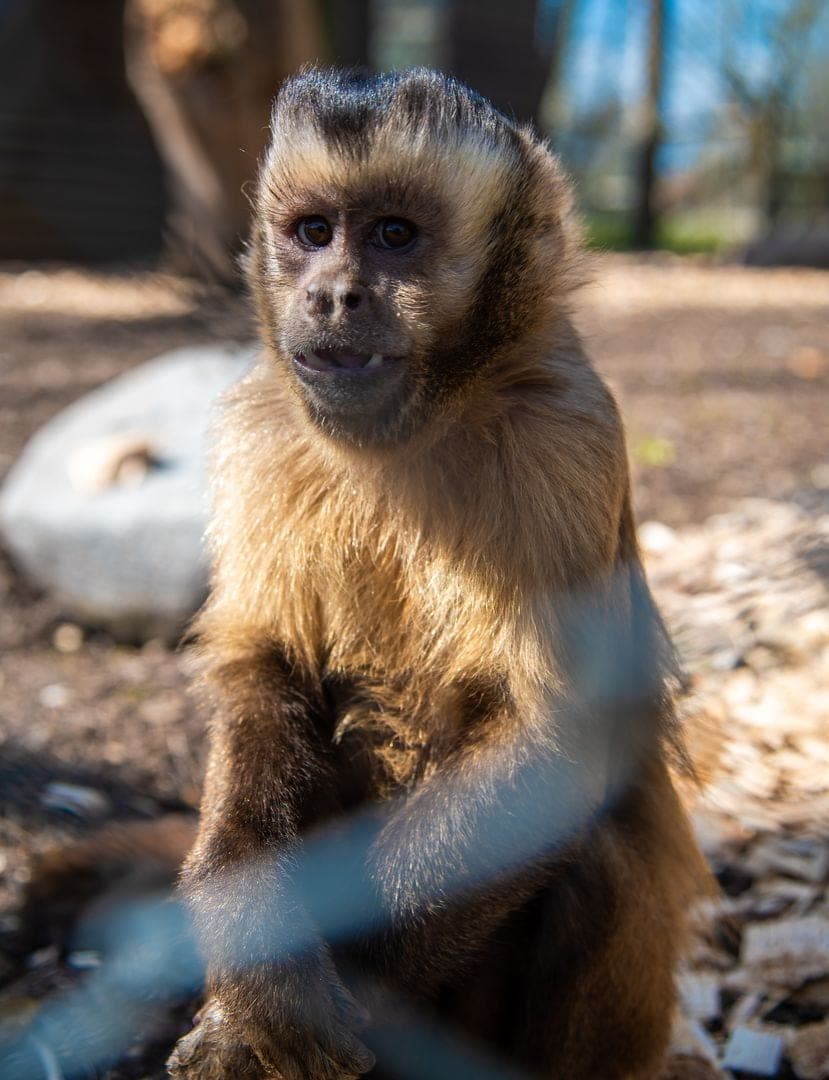
The Capuchins — From Research Lab to Freedom
A capuchin family came from a French university where they had been used for medical research. They arrived at Odsherred Zoo Rescue on 28 June 2006.
A capuchin family originated from a French university where they were used for medical research. The breeding pair and their four eldest offspring had been subjected to insulin testing for diabetes research.
The family arrived at Odsherred Zoo Rescue on 28 June 2006. They were quiet, calm animals that had not lost their trust in humans. The alpha male, Kloklo, learned a "trading technique" for accepting medicine.
Upon arrival, the monkeys showed signs of prolonged indoor confinement. Their motor skills were poor, their reflexes sluggish, and their fur appeared grey and dull. The staff concluded that they had lived indoors their entire lives.
Over time, the capuchins improved dramatically. Their motor coordination reached optimal levels. Fresh air, carefully calibrated nutrition, vitamins, minerals, and oils restored their health.
Their fur became shiny and their eyes bright. They now exhibit natural behaviour — hanging by their prehensile tails and cracking nuts.
When you choose to support a specific story through a donation or subscription, you are supporting animals with similar backgrounds, needs, and histories, both now and in the future. Some of the animals featured in these stories still live at Rescue Zoo today, while others have sadly passed away of natural causes after a long life in our care. The stories on our website reflect the real animals and situations we have worked with, and your support helps us continue helping animals like them. We do our best to keep everything updated, and if you would like to know more about a specific animal, you are always welcome to ask us when you visit or contact us by email.
Support an animal at Rescue Zoo
With a monthly contribution you directly support the animals' daily care, food, and veterinary visits.